Po ‘Lahi . . .
Nanumea’s “Big Days” Festival
Flotilla returning from all night fishing
Young women “hoa” partners have greeted the young men and joined them on the canoes - 1984
3 February 1984
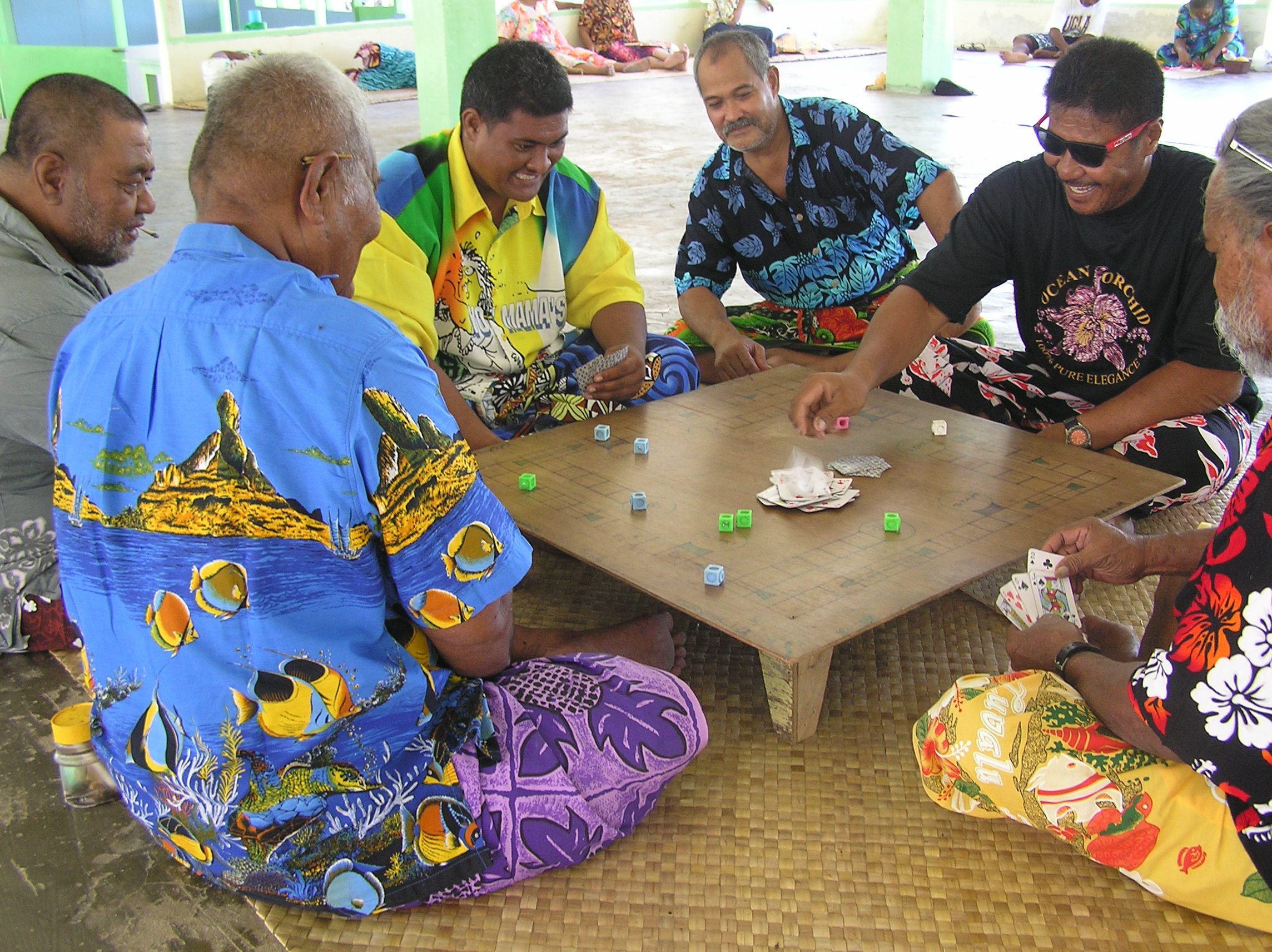
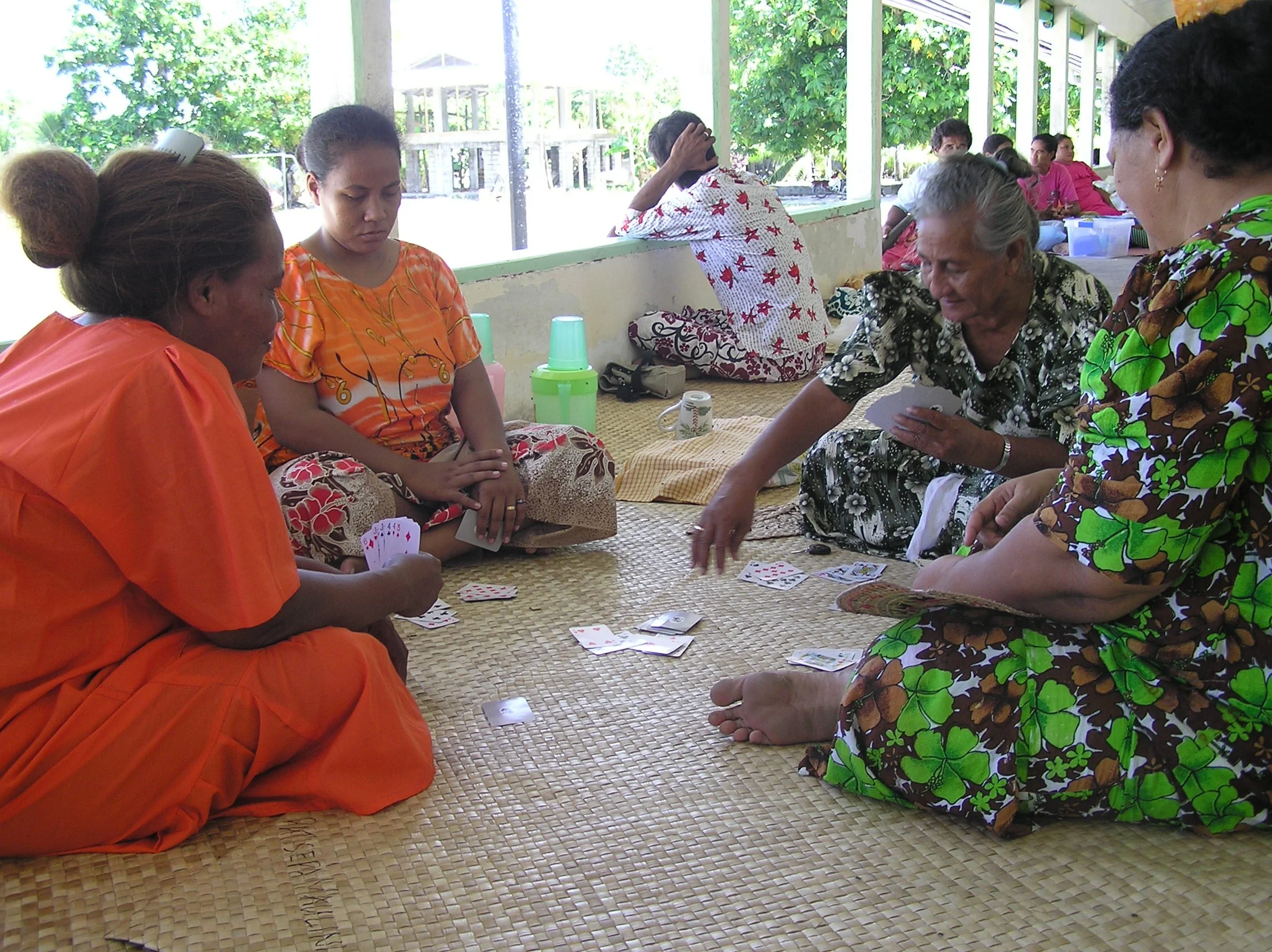
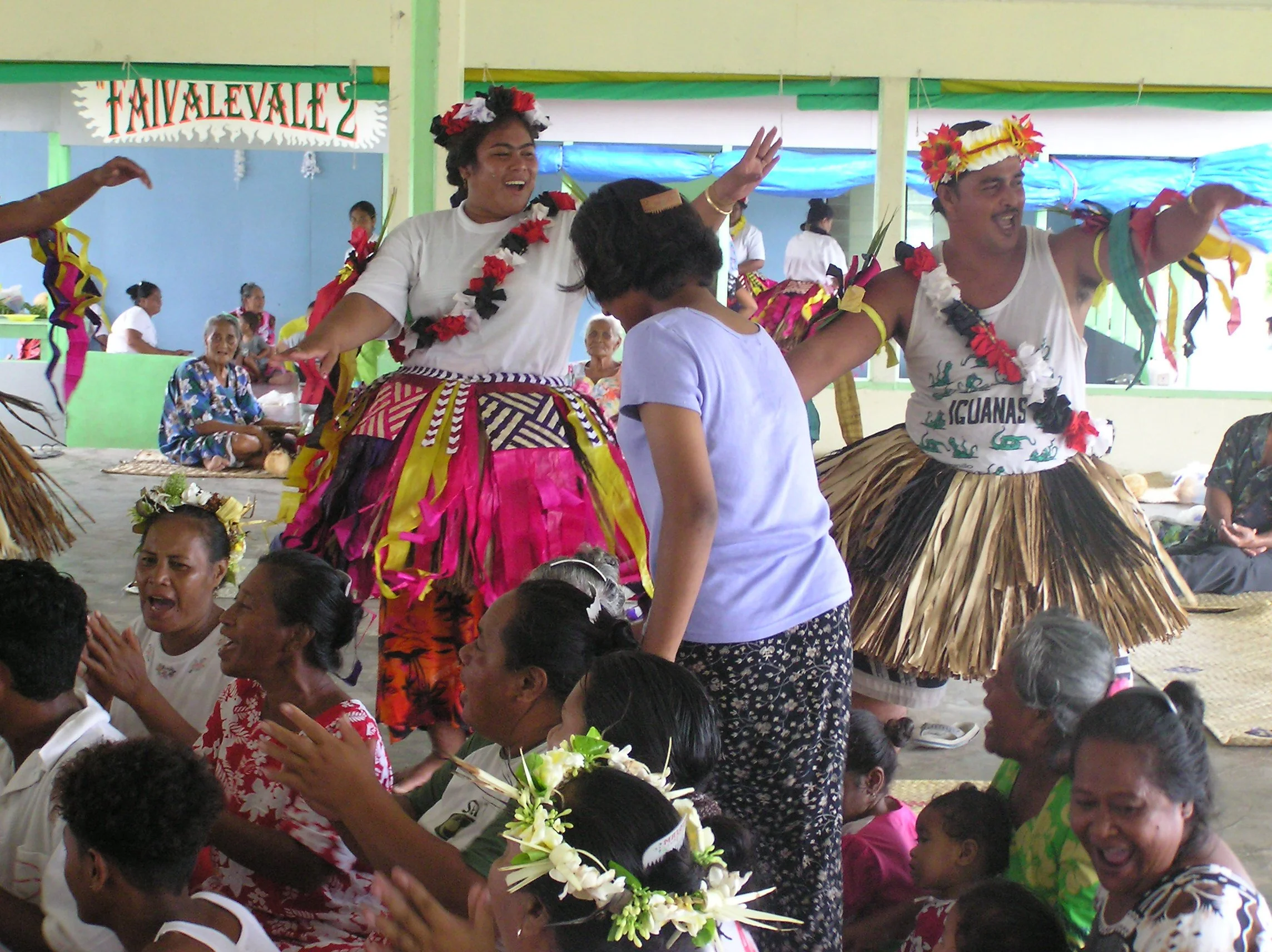
The Nanumean festival season known as Po ‘Lahi ("Big Days") begins just after Christmas and engages island life for several weeks. Normal routines are set aside and the community gathers daily in the āhiga for feasting, speech-making and relaxation. Games of ano, Nanumea's preeminent ball game, are played in the adjacent playing field by teams of festively-dressed and garlanded young women and men.
Play can begin in early morning and routinely lasts until dusk, with a pause for the mid-day feast. Elders officiate from the steps of the āhiga and the rest of the community gathers inside the building or in shaded areas around the playing field for an afternoon of chatting and watching the play. Evening events usually include fātele dances (or sometimes tuisi) and there are also choir competitions, plus a series of church services led in turn by each of the four Potopotoga groups at which their annual donations to the church are given. This time of festivity and play expresses Nanumea’s energy and vitality, and is a much-anticipated highlight in the annual cycle of community life.
The anchor points for Po ‘Lahi are Christmas, New Year’s and Po o Tefolaha (Tefolaha’s Day) on January 7th or 8th. Po o Tefolaha is an all-night celebration that honors both Tefolaha, the original founder of the island long ago and also commemorates the community’s final acceptance of Christianity by the remaining traditionalist families in January of 1922, as they agreed to set aside their own spiritual traditions. Po ‘Lahi festivities tend to increase in intensity and often become more elaborate as the days go by. Elders’ speeches build on each other, ano teams invent new taunts to call out as games are played, new costume combinations are dreamed up, and the routines of daily life give way to enjoying another traditional season of community-focused play.
The length of Po ‘Lahi festivities varies from year to year, always influenced by the local situation and other events or obligations requiring community attention. But in years when enthusiasm runs high and competitive energy has built up, festivities may continue on for many weeks or even months. One of these extended festive seasons occurred in 1983-84 when we were living in Nanumea, and lasted for six weeks. Salailoto Make also fondly recalled the even-longer Po ‘Lahi season of 1952-3, when she was 23 years old, which continued well into March.
More Information on these Topics:
Arrival of the “Queen” - Po ‘Lahi 2004
Fish donation to the Fenua after all-night fishing by the tamatane — January 1984