
Tupuga, Faiga mo Iloga (Fakavae)
Tangisia and Anne edit the Fakavae — Funafuti, 14 November 2003
This collaborative project involved the Nanumean community in Funafuti, representatives in Suva, many elders in Nanumea, Tangisia Kilei, and Anne and Keith Chambers. It had begun some ten years earlier, in the 1990s, when Tangisia took it on himself to begin writing down Nanumean customs and traditions (tū, faiga, aganū). This focus had always been central to Anne and Keith’s ethnographic endeavors too, and thus they were invited by Tangisia and other Nanufuti elders to lend a hand in broadening and strengthening Tangisia’s work. They arrived in Funafuti in September 2003, guests of the Nanufuti community, and began a five-month collaboration with Tangisia and the new working group, Te Komiti Faiga mo Iloga, which aimed at creating a dual language book.
The project’s goal remained much as Tangisia had originally envisioned it: to capture in writing Nanumea’s “traditional” knowledge and practices. While our focus was broad, spanning the entirety of Nanumean traditions and customs, Nanufuti elders wanted particular attention given to traditional political organization, including the chieftainship and how it worked. Thus, the project came to be referred to as Te Fakavae — the foundation or constitution of the island. The work seemed urgent to us all, since Tuvaluan society, and of course Nanumea itself, had been changing rapidly. Traditional society felt endangered. The elders who “really knew things” were all quite aged; in fact, many renowned Nanumean experts had already passed on. Time seemed short.
After several months of intensive work with Tangisia in Funafuti, Keith and Anne went to Nanumea to share preliminary drafts with the community there and collect more documentation, while Tangisia continued his efforts in Funafuti. In Nanumea, we met with working groups from both Haumaefa and Lolua and with many interested individuals. Not only were we able to add in valuable information but we were also given help in translating the chapters from English to Nanumean, and vice versa, since we needed to produce equivalent chapters in both languages. We returned to Funafuti in January, collaborating with Tangisia and other Nanumeans there on translation and various finishing touches. The manuscript was completed on February 4th, 2004. The English language volume was titled Origins, Customs and Identity of Nanumea. Its companion volume in the Nanumean language was titled Tupuga, Faiga mo Iloga faka Nanumea.
This book, in two languages, was always considered a “first draft.” Many topics had just been outlined but not written, some descriptions were incomplete, and some sections still needed to be translated. However, time had run out. After Keith and Anne returned home, Tangisia wrote a few additional parts and sent them for inclusion. We all expected to continue to collaborate on the project in the future, as time allowed.
But, suddenly and unexpectedly, Tangisia suffered what must have been a heart attack while bathing in the lagoon near his home in Funafuti. He died shortly afterward on June 11, 2007. This sad event was a shock to everyone. Six months later, in January 2008, Keith traveled to Funafuti to consult with Te Komiti Faiga mo Iloga of Nanufuti about the project. We all agreed that the manuscript needed more work but, unfortunately, none of us had time to complete it just then. We also decided that the best option would be to share the core of existing materials (Chapters 1, 2 and 3) with Nanumeans at home and abroad on this website. We all hoped the 2004 draft would serve as a foundation that would be further augmented in the future. Unfortunately, the years sped by and work did not resume.
In 2025, however, when Keith and Anne began work to redesign the Nanumea Website, they were determined to include the Fakavae in its entirety, even though the volumes would need their own updating and revision. Over the next year they edited the existing material, added more specific details, inserted drawings and footnotes, translated some sections, and tried to be sure that the Nanumean language chapters followed contemporary spelling conventions. Material from the rushed last weeks of work in 2004 could now be added, as well as new information Tangisia had emailed in 2006. They took care to keep the Tuvaluan and English volumes as similar as possible to each other, and to keep them true to the 2004 versions. These two newly revised and augmented volumes are available here to read and download by clicking on the links on this page.
“Au Tuu mo Aganuu “— Nanumea, January 2004 (Alb 15/220
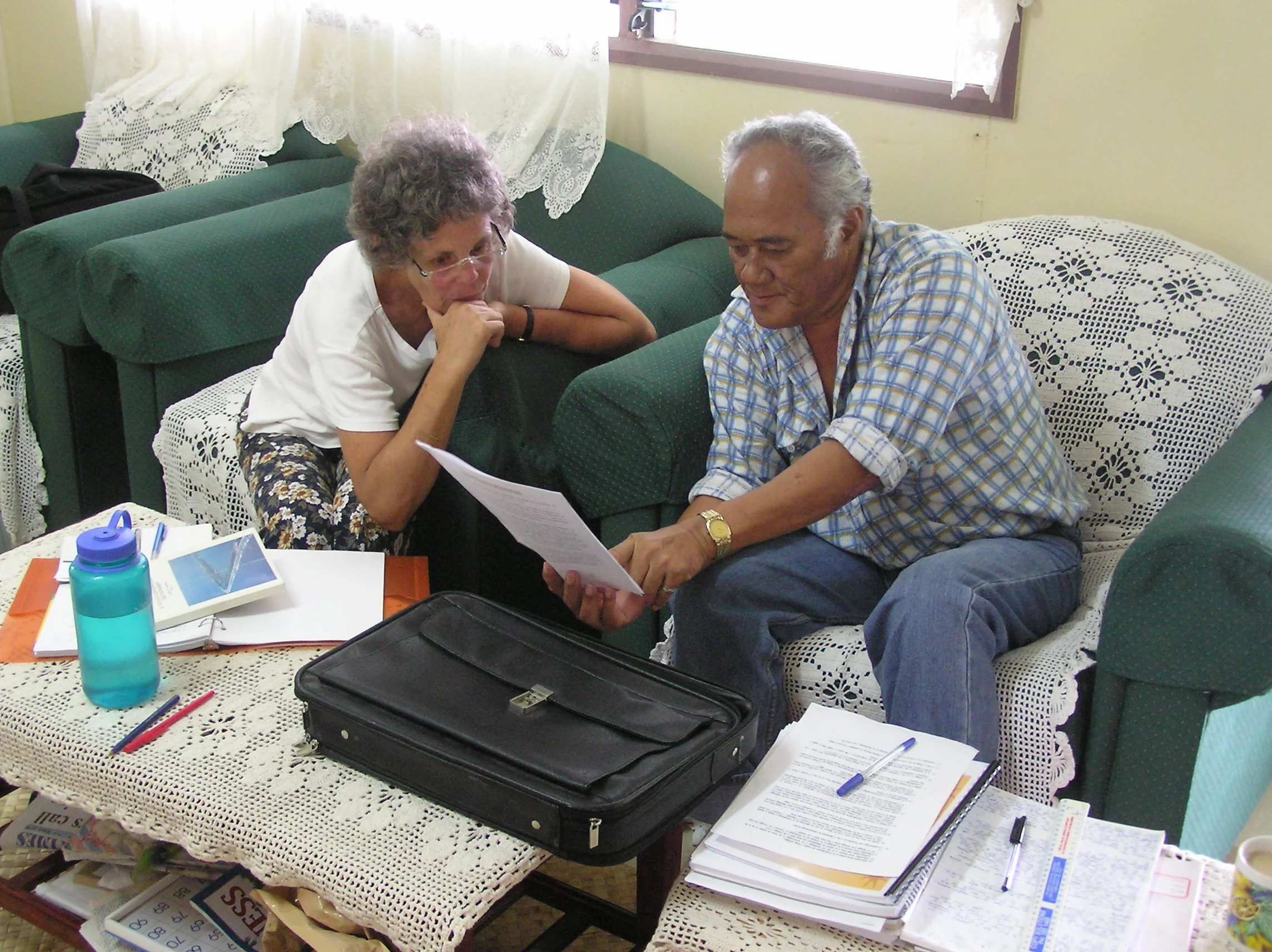
Tangisia and Anne working on the Fakavae in Funafuti
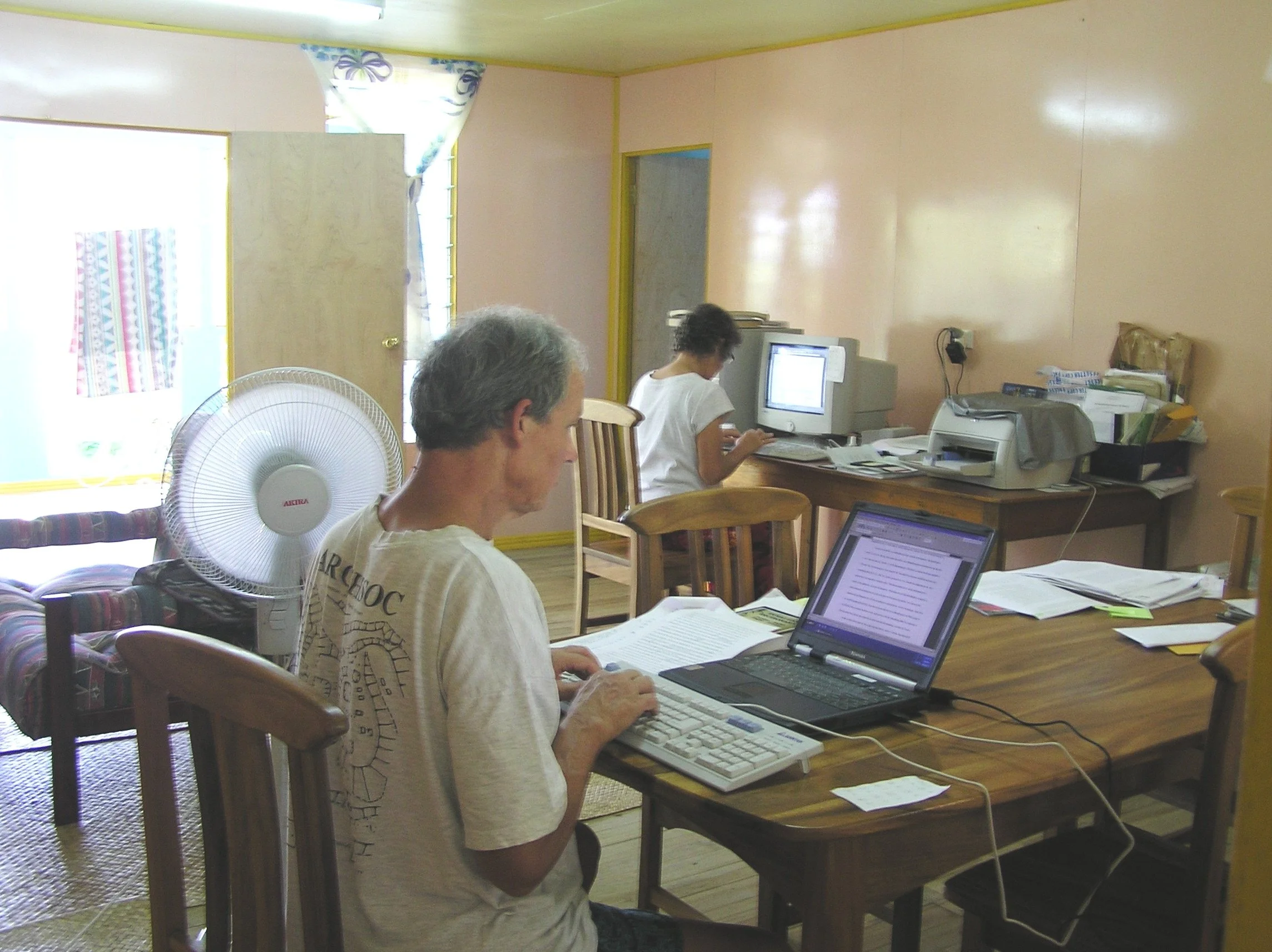
Fakavae work - Funafuti
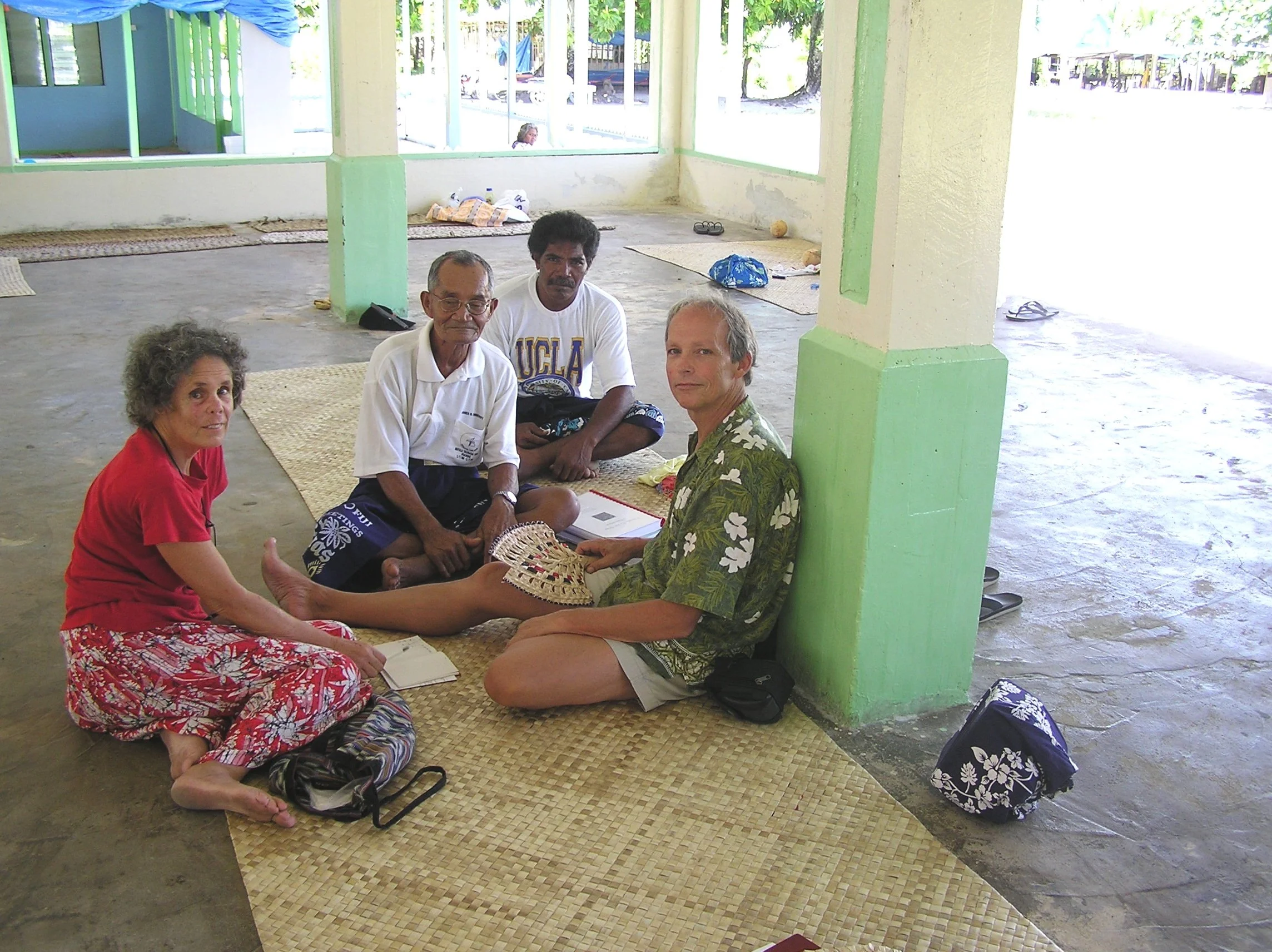
In the Nanumea Ahiga with Sue

Discussing Fakavae with Komiti in Nanumea
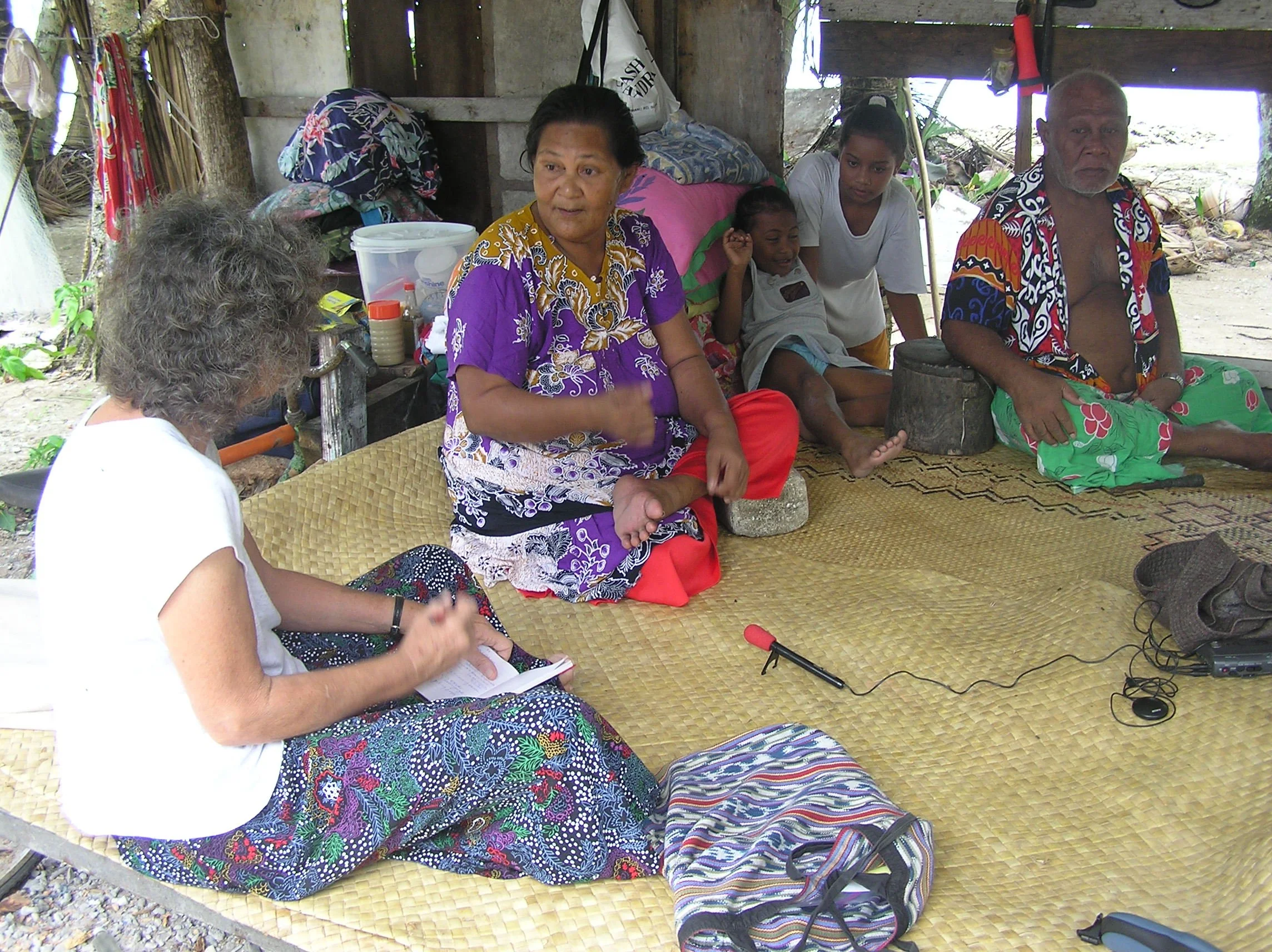
With Eseta and Pelesese - January 2004 Nanumea
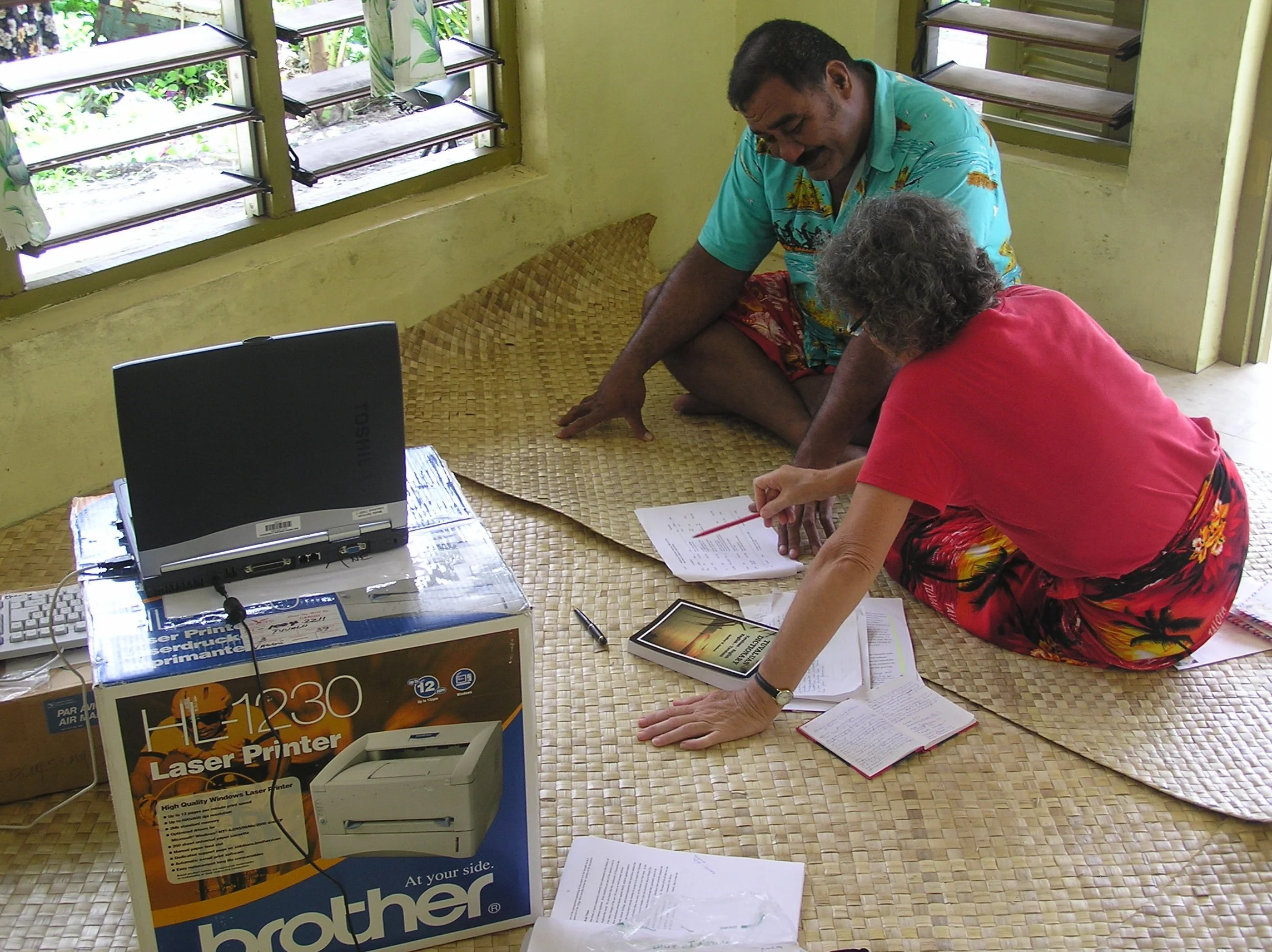
Nanumea, January 2004 working with Ataieta
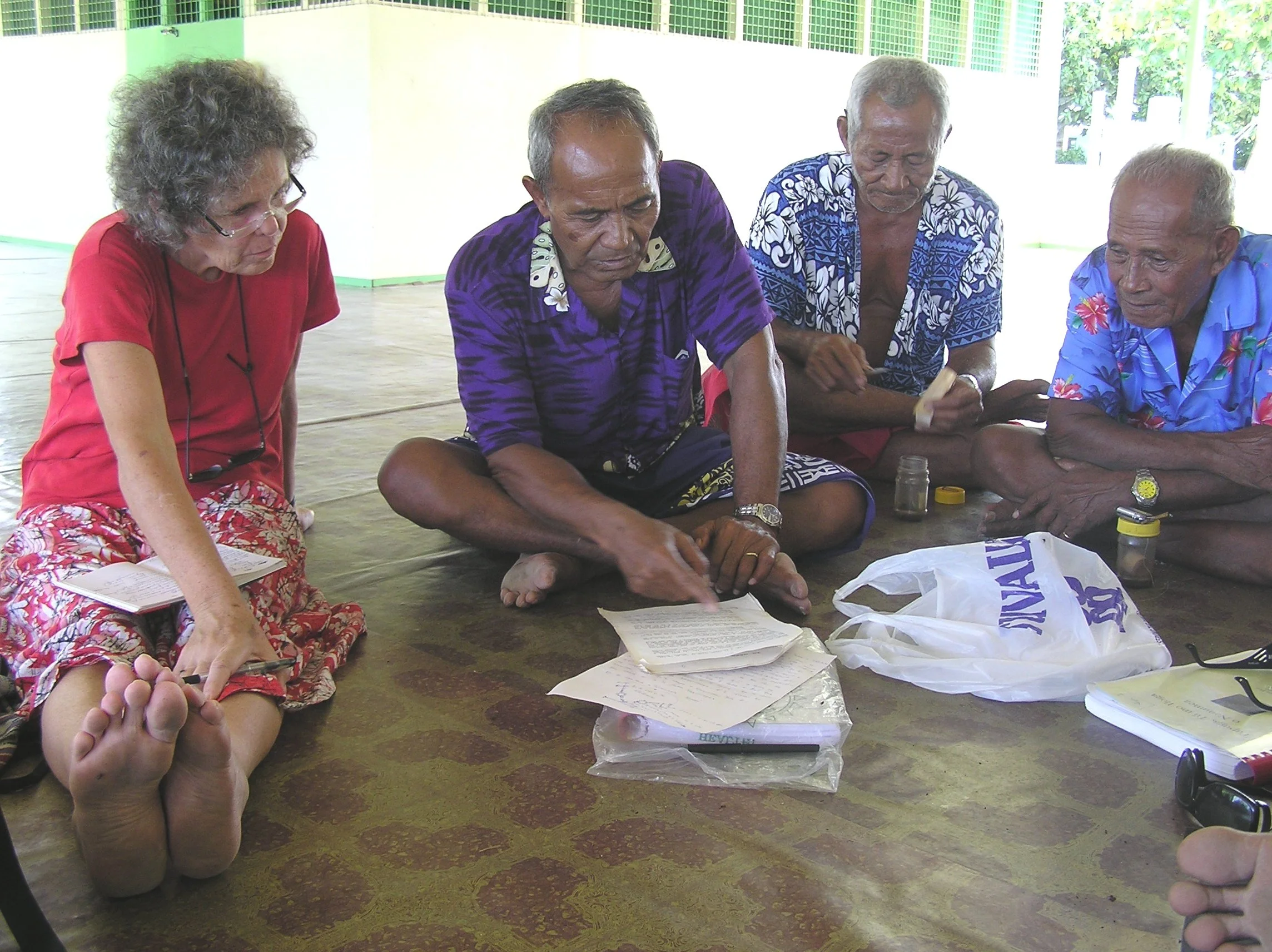
Fakavae work, Nanumea (26 Dec 2003)
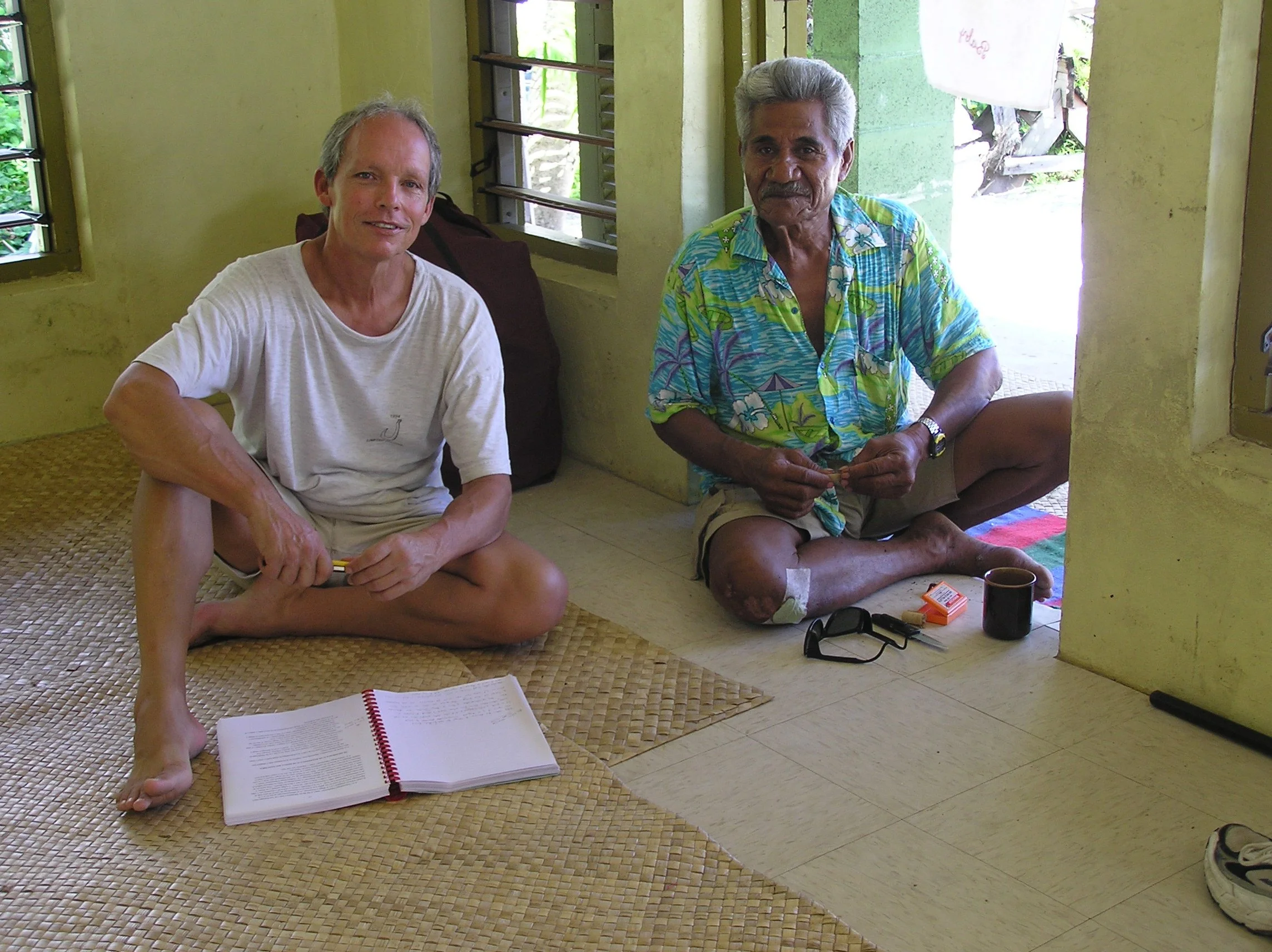
With Sosemea/Lolesi

In Nanumea, January 2004
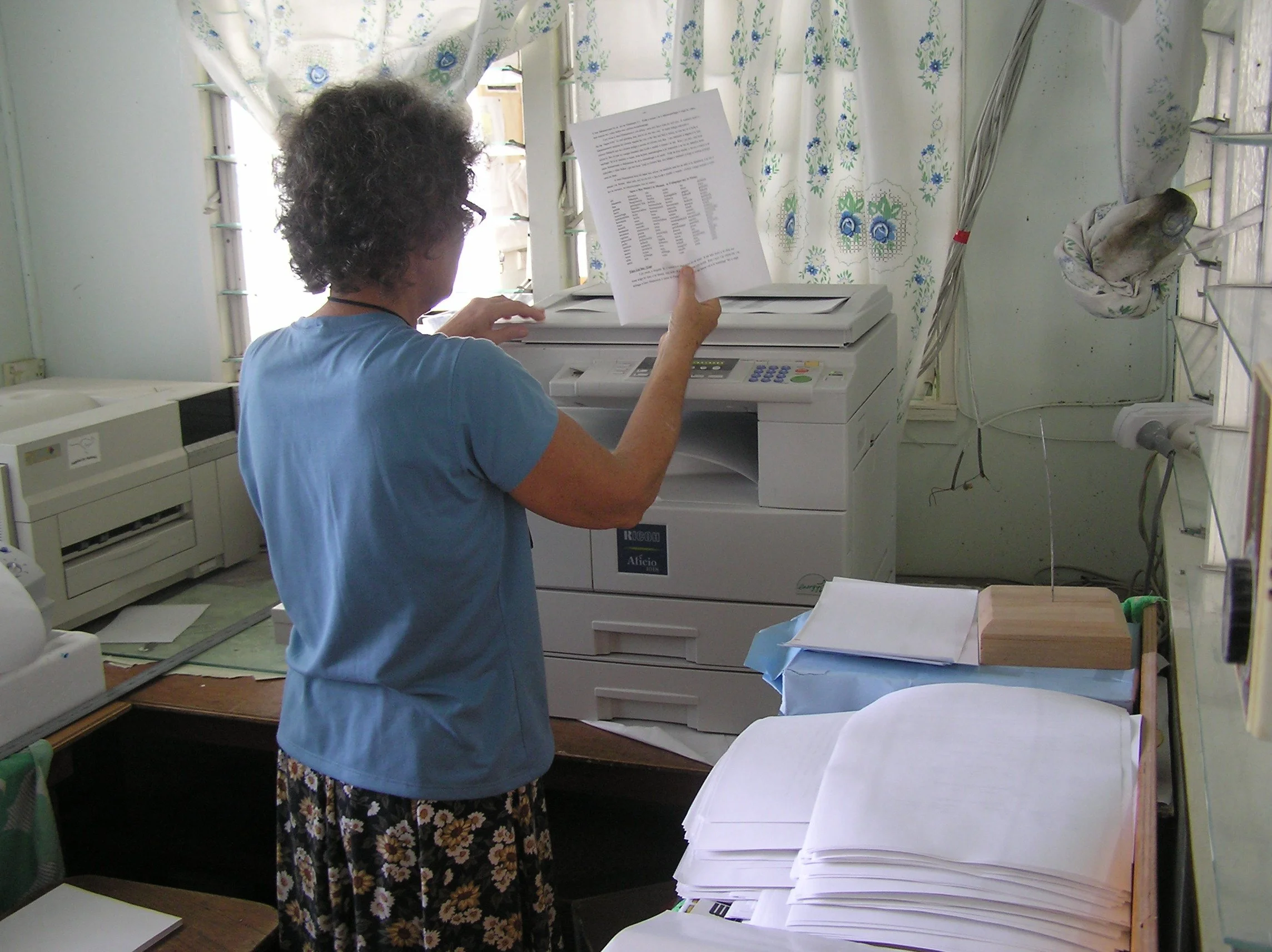
Making copies in Funafuti, February 2004
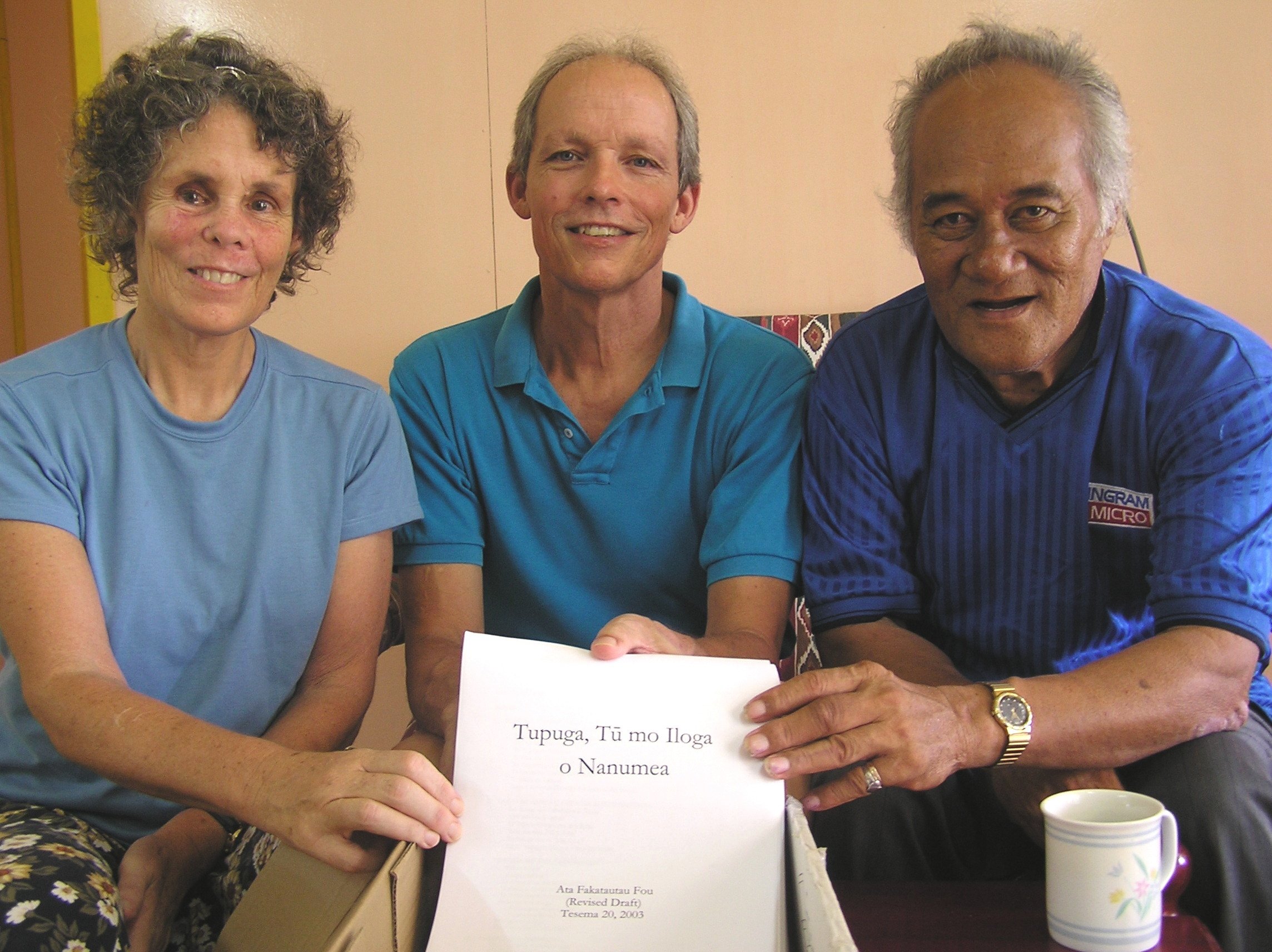
The "First Edition", 4 February 2004